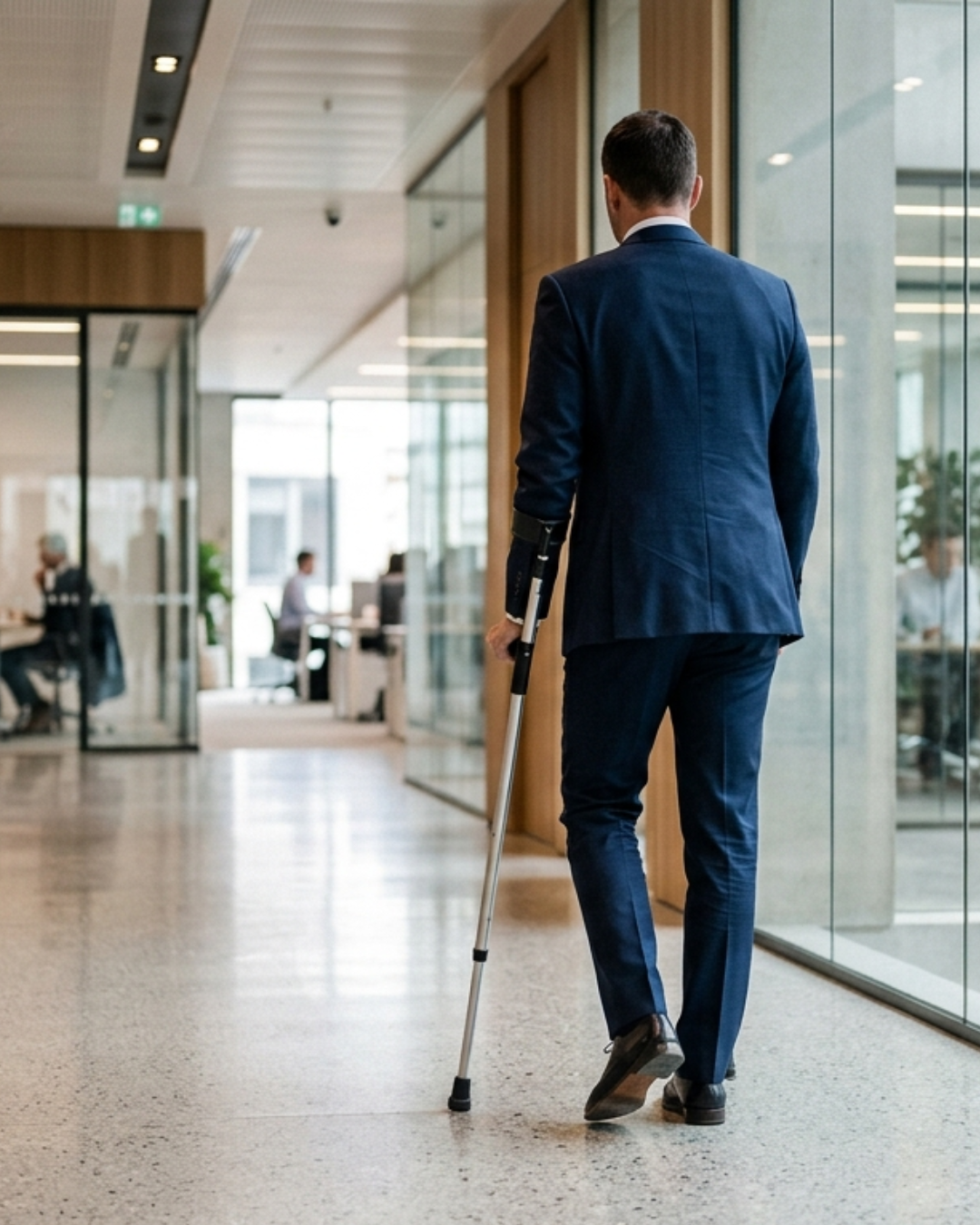
An employee had been on sick leave for nearly two years and suddenly reported that he had fully recovered. He wanted to go back to work and was of the opinion that his employer should continue to pay his wage. The UWV (the Employee Insurance Agency) appeared to support him in this regard. Nevertheless, the court ruled against the employee. What does this mean for employers?
Recovery report after nearly two years on sick leave
The employee had worked as a director since 2011. In April 2024, he stopped working due to sickness. In addition to the medical issues, there was an ongoing labor dispute. According to the company doctor, that dispute was hindering the recovery process and the return to work.
The company doctor therefore recommended mediation on several occasions. An initial meeting took place in early 2026, but the dispute persisted.
In March 2026, the company doctor made it very clear: the employee was unable to do his own work, and recovery within 26 weeks did not seem likely. Less than three weeks later, the employee reported that he had fully recovered and wanted to return to work.
The employer did not accept that recovery report.
The UWV appeared to take the employee’s side
The employee then requested an expert opinion from the UWV. It was apparent from this report that he could be deemed fit for work as of the end of March, provided that mediation had taken place.
For the employee, that was a key factor. According to him, he was able to return to work, and therefore the employer should pay his wage. The employer specifically referred to the company doctor’s reports. According to him, these showed that the employee still had medical issues and that the labor dispute had not been resolved.
The court therefore had to determine whether it was sufficiently likely that the employee was able to work full-time again.
The court rejected the UWV’s position
The court did not consider the expert opinion to be decisive. The opinion had been phrased conditionally: the employee was to be deemed fit provided that mediation had taken place. Furthermore, both sides of the argument had not been heard, no information had been requested from the doctors who were handling the treatment, and the court found the conclusion insufficiently substantiated.
In addition, shortly before the recovery report, the company doctor had determined that the employee was unable to do his own work. Even after the recovery report, the company doctor noted that there were still some medical issues. Furthermore, the labor dispute had still not been resolved.
Apart from the expert opinion, the employee did not submit any other documents showing that he was fully fit for work.
No wage after expiry of the sickness period
The period during which the employer had to keep paying the wage during sick leave had already expired. After that, the employee was only entitled to a wage if it was sufficiently likely that he could do his own work again.
According to the court, he could not. Therefore, it dismissed both the claim for a wage and the claim for reinstatement.
Take away: a recovery report does not necessarily mean anything!
A recovery report does not mean that, as an employer, you must always automatically assume that the employee is fully fit for work. It would be wise to review the entire case file, especially if the company doctor reached a different conclusion shortly before.
Even an expert opinion from the UWV does not have to be decisive. Its contents and the supporting evidence are taken into account, as are recent evaluations by the company doctor and other circumstances that may hinder a return to work.
 Copy Link
 Share on LinkedIn